


B2B eCommerce

Sidney Gallaway
Strategic Innovation Manager
If you’re a B2B eCommerce manager, you’re exhausted. And it’s not your fault.
You finish one project only to find five more have landed on your plate—each one suddenly “urgent.” You’re organized by nature, but the pipeline feels never-ending. Sales needs product updates yesterday. Customer service is flagging site issues. Marketing wants new landing pages. IT is asking about integrations or not telling you when they make a change or update the version of the system. And leadership keeps asking, “Why is this taking so long?”
Sound familiar?
You’re not alone. And before we talk about solutions, we need to talk about something more fundamental: Do you actually know what you’re dealing with?
The Real Problem Isn’t Your To-Do List
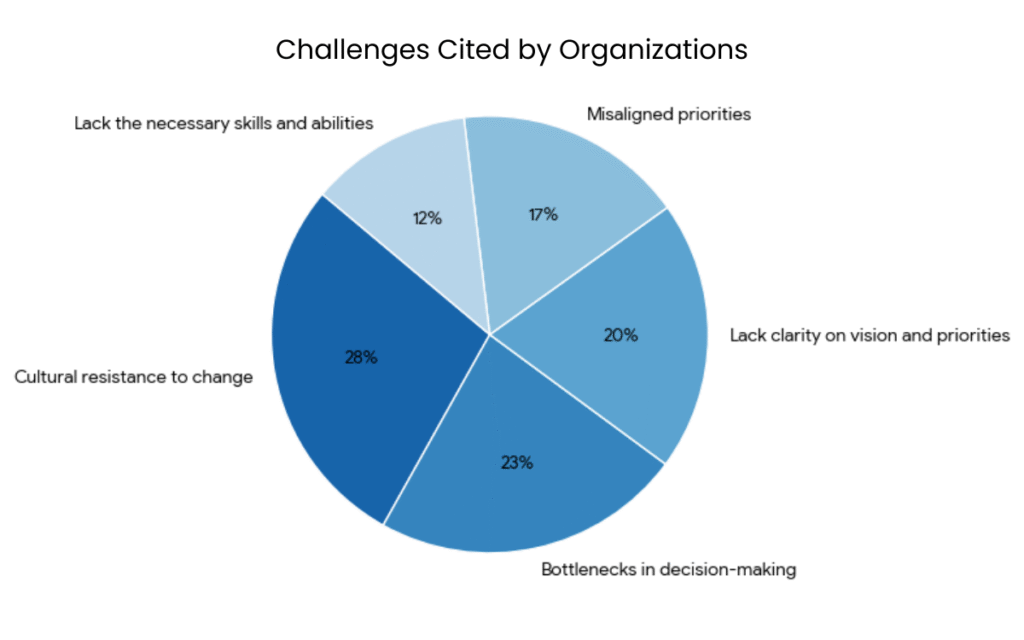
According to recent research from Kotter on organizational change, when leaders are asked “What slows your organization down the most?” they respond:
- 28% cite cultural resistance to change
- 23% point to bottlenecks in decision-making
- 20% lack clarity on vision and priorities
- 17% struggle with misaligned priorities
- 12% lack the necessary skills and abilities
Notice what’s missing from that list?
Your ability to work hard enough.
The exhaustion you’re feeling isn’t because you’re not doing enough. It’s because your organization hasn’t created the systems, clarity, or space you need to be effective.
Change Fatigue Is Real (And It’s Getting Worse)
Leaders across industries are reporting higher anxiety in their organizations. Teams are experiencing what experts call “change fatigue”—the state of burnout and silent cracking that happens when people face constant change without seeing positive returns.
Here’s the thing: it’s not that people don’t want to learn new skills or embrace change. The problem is there isn’t space for learning.
When was the last time someone took something OFF your plate to make room for something new? When was the last time you had protected time to experiment, learn, and implement without the pressure of seventeen other priorities?
And here’s what makes it harder: many organizations don’t understand what a digital team should look like or why additional support is essential. Leadership may not recognize the need for dedicated eCommerce resources, and existing teams sometimes resist digital transformation, creating friction that leaves you stuck in the middle.
This isn’t a motivational problem. It’s a systems problem.
But here’s what most people get wrong: they try to fix the system before they understand it.
You Can’t Build on a Cracked Foundation
Most eCommerce managers skip the assessment phase and jump straight to solutions.
They implement new tools without understanding their current workflows. They set priorities without knowing their actual stakeholder landscape. They create processes without documenting their current reality.
The result? Band-aids on symptoms instead of solutions to root causes.
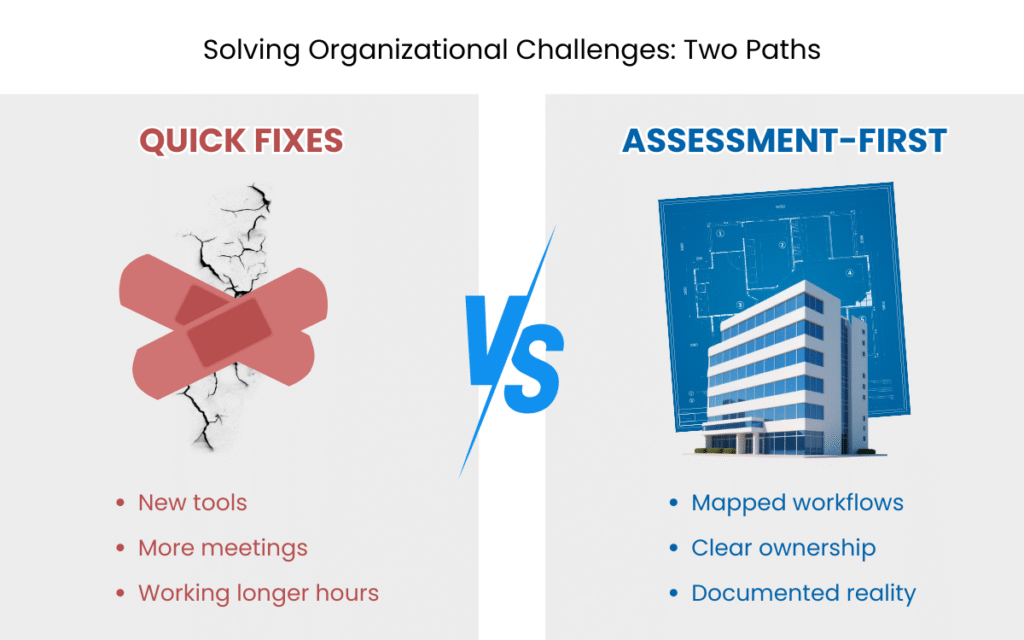
Think about it: How can you build an effective intake system if you don’t know where requests are actually coming from? How can you prioritize effectively if you haven’t identified who really makes decisions in your organization? How can you protect your time if you don’t know where it’s currently going?
You can’t.
And that’s why every eCommerce manager who’s tried to “get organized” by implementing one more tool or working one more late night ends up right back where they started six months later—exhausted, overwhelmed, and wondering why nothing actually changed.
The truth is: You can’t fix what you haven’t mapped.
What Q1 Is Actually For
If you’re reading this in early 2026, you have something precious: momentum. The year is new, budgets are fresh, and there’s organizational energy around making this year different.
Don’t waste that momentum on solutions you haven’t diagnosed.
Use the first quarter to do what successful digital transformations always start with: Taking stock of your digital landscape.
This isn’t sexy work. It won’t give you the dopamine hit of launching a new feature or checking off a big project. But it’s the work that actually creates lasting change.
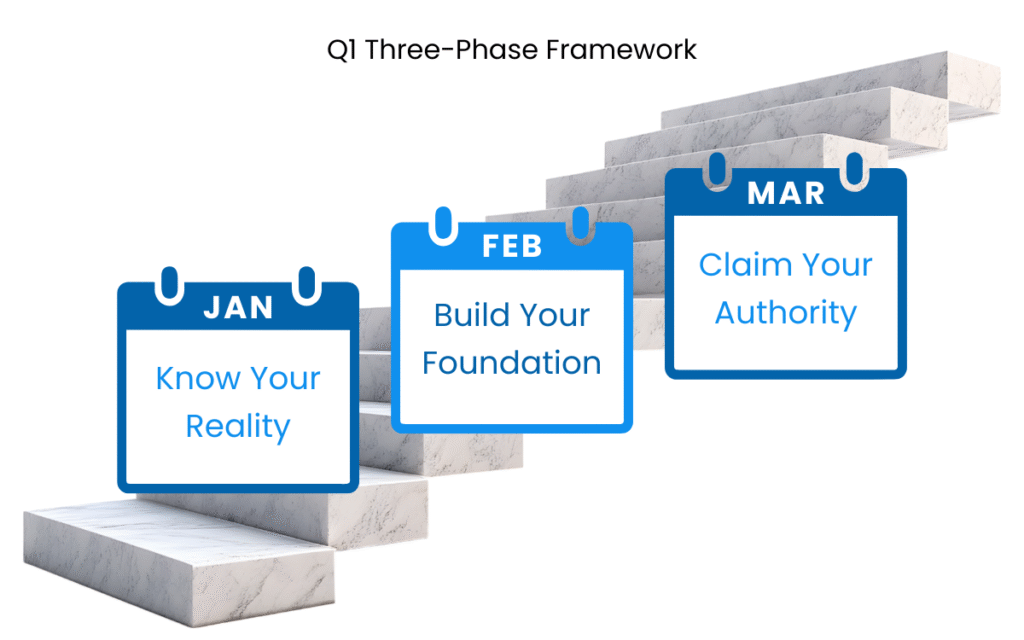
Your Q1 Journey: Three Phases
Over the next three months, I’ll be sharing detailed frameworks for each phase of building your foundation. Here’s what’s coming:
January: Know Your Reality
Before you can fix anything, you need to understand what you’re actually dealing with. January is about honest assessment without judgment.
You’ll learn how to conduct:
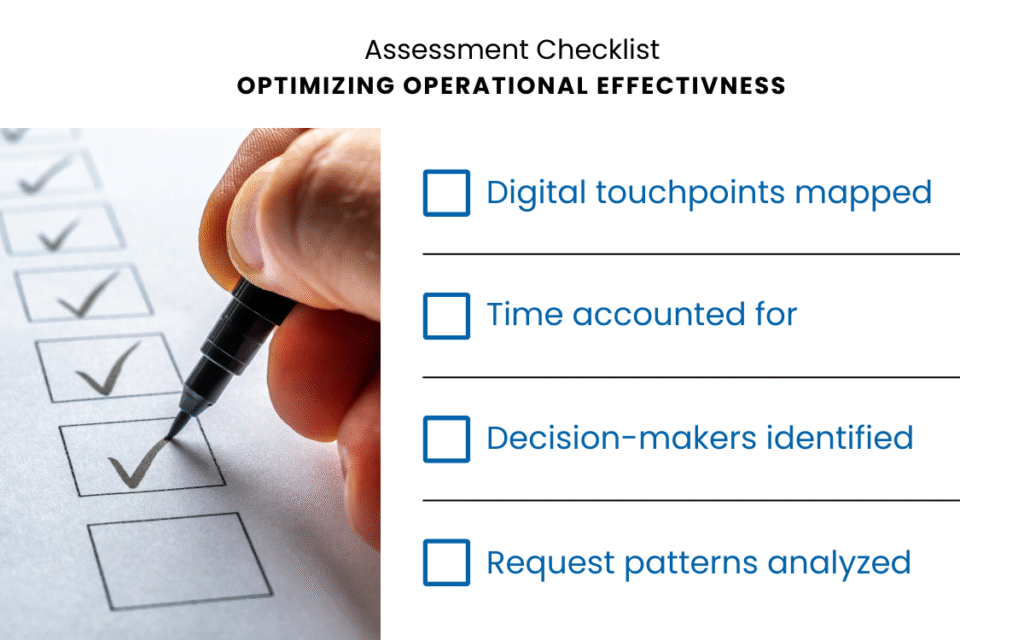
- A digital ecosystem audit (what actually lives where)
- A time audit (where does your time really go)
- A stakeholder reality check (who actually makes decisions)
- A request retrospective (what keeps landing on your plate)
Coming in my next post: The four assessments every eCommerce manager needs, with downloadable templates you can use immediately.
February: Build Your Foundation
Once you know your reality, you’ll build Version 1.0 of the systems you need to manage it effectively.
You’ll create:
- An intake system that stops the chaos
- A priority framework leadership will actually support
- Documentation that becomes your source of truth
- Communication cadences that create visibility without creating more meetings
March: Claim Your Authority
You’ll shift from reactive to proactive by establishing your expertise and boundaries.
You’ll learn to:
- Set boundaries that stick
- Speak leadership language
- Create a governance model
- Position yourself as the strategic partner, not the order-taker
Why This Approach Works
When you take the time to map your digital landscape before you try to fix everything, three things happen:
1. You stop wasting energy on the wrong problems.
Once you see where your time actually goes, you can make informed decisions about what to protect, what to delegate, and what to kill entirely.
2. You build credibility with leadership.
When you walk into a meeting with a “Current State” analysis that clearly shows the scope of what you’re managing, the competing priorities, and the resource gaps, you’re no longer complaining—you’re presenting data.
3. You create a foundation that can actually hold weight.
Systems built on guesswork fail. Systems built on reality stick. The processes you establish in Q1 will carry you through the entire year because they’re based on how work actually flows in your organization, not how you wish it would flow.
What’s Next
2026 doesn’t have to be another year of chaos. But it starts with honest assessment, not heroic effort.
Next week, I’ll share the complete January framework: the four assessments you need to conduct, step-by-step instructions, and downloadable templates you can start using immediately.
In the meantime, ask yourself:
- Do I actually know where all my digital touchpoints live?
- Can I account for where my time went last week?
- Do I know who really makes digital decisions in my organization?
- Have I analyzed what types of requests keep coming my way?
If you hesitated on any of those, you need January’s framework.
About Sidney Gallaway
Sidney Gallaway is Strategic Innovation Manager at ImpaqX, helping B2B eCommerce teams build the systems and stakeholder buy-in needed to lead digital transformation with confidence.
References:
[1] Kotter. “Built to Adapt: How Top Leaders Are Preparing for 2026.” Webinar featuring Guarav Gupta, Nick Petscheck, and Vanessa Akhtar, 2025. Learn more about Kotter’s change methodology at kotterinc.com.
Connect with Sidney on LinkedIn where I’m sharing strategies, frameworks, and real-world examples throughout 2026 to help B2B eCommerce managers reclaim their time and elevate their impact. Sidney Gallaway’s LinkedIn Profile